
A wholistic approach to treating anxiety and depression includes focus on mind, body, and spirit. Recovery efforts may include counseling for the mind, medication for the brain, and prayer from the spirit.
As with recovery from other illnesses, lifestyle changes may help to restore healthy function of the brain. Changing diet and increasing exercise helps in diabetes, but sometimes medication is needed. In a similar way, reducing stress and improving self-care helps to heal the brain from emotional strain but medications are sometimes needed.
In a healthy brain, natural healing processes are occurring all of the time. A chemical known as BDNF (brain derived neurotrophic factor) directs the repair of brain cells that have been damaged by stress. This blog site will present new data suggesting that antidepressant medications work, in part, by increasing the activity of these growth factors. Forward thinking scientists are further suggesting that research will soon show that psychological counseling and spiritual commitments will produce similar affects on BDNF and mood.
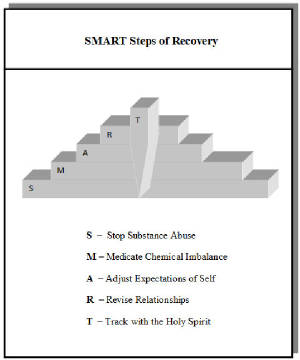
The SMART Steps Plan, as described in “Breaking Through Depression”,provides a holistic, step-wise guide to restoring emotional wholeness. It’s principles can be applied to, both, treat and prevent depressive illness.
Chapter 12
BTD excerpt:
The road map presented in this guide can be tailored to fit the needs of each individual. Milestones are marked as follows:
S – Stop Substance Abuse
M – Medicate Imbalances
A – Adjust Expectations
R – Revise Relationships
T – Trust God
The first step – Step S – is stopping substance abuse. Excessive drinking can lead to depression. Depression can lead to excessive drinking. This “depression-addiction connection” must be broken from the start.
The second SMART step is medicating chemical imbalances. Not everyone needs medication. Counseling and spiritual commitment often resolve milder forms of depression. However, in longer term and deeper forms of black mood, do not delay. New research is showing that areas of the brain’s cortex may actually shrink in depressive illness. Other research shows that medical treatment may stimulate re-growth of brain cells.
A third milestone along this SMART pathway to recovery is adjusting expectations you have of yourself. Set your expectations too low and you will be treated like a door-mat. Setting them too high will lead to unhealthy levels of stress. Too much stress hormone can damage your brain cells. Recognizing your limits well help to stop the injury and begin re-growth.
The fourth milestone on the road to recovery – Step R – is revising your relationships with others. As self-imposed demands can cause problems, so can unrealistic demands from other people. Learn to say no. Learn to set boundaries. Setting those limits will make room for healthier pursuits like spirituality.
The fifth step of SMART renewal is trusting God. For the believer, a vital relationship with God can be a important part of each earlier step. Spirituality is emphasized in this step because full joy in the Lord rarely returns when brain chemistry and emotions remain unbalanced. When brain cells are re-balanced and self-esteem restored, people experience a new sense of freedom and excitement that often overflows into their relationship with God and other people.
For more information see donhallmd.com and order the book Breaking Through Depression
 Breaking Through Depression and Anxiety