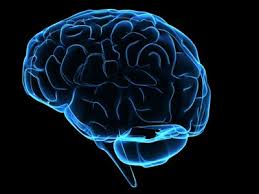
Brain Changes in Youth with Depression

youth brainJoining the quest to discover the brain basis for depression, a group of scientists recently published results from a study of youth (ages 4-24) with clinical depression (*).  The scientists compared the brain activity of 250 depressed youth to brain activity of a non-depressed group.

The study suggests that over-activation of two brain areas (Cingulate gyrus and thalamus) lead to “hypervigilance toward emotional stimuli”.  In other words the youth could not stop themselves from focusing on negative emotional ideas – this despite an increased activation of the dorsolateral prefrontal cortex (an area of the brain responsible for logical control of emotion).

While not offering final answers to the question, “What happens to the brain of people with depression?”, the article does provide evidence that brain malfunctions associated with depression can start in childhood.  The findings might also compel us to more urgently get help for children with depression, not to simply excuse depressive behaviors as a phase of childhood or something they can work out on their own.

(*)  Chris Miller and others. Meta-analysis of Functional Neuroimaging of Major Depressive Disorder in Youth, Journal of the American Medical Association -Psychiatry.  Published online September 2, 2015.

Prayerful Meditation and Contemplation

photo (22)While on vacation with old friends this summer, I enjoyed a few moments of solitude and prayer beside the lake.  When I returned to the cabin a friend asked me, “What are you doing out there?”  I tried to explain what I had reading about contemplative prayer.

For me, contemplative prayer is a form of meditation that begins with quieting and focusing my mind.  I find it remarkably relaxing to gaze over a lake while praying.  Considering the waves as they move over the surface is curiously relaxing.  Not much to analyze, not much to worry about.  This relaxed state of mind is a prelude to contemplative prayer.  For some it comes with time at the beach or the lake.  For others it comes with inspirational reading or mellow music.

Contemplative prayer has as its aim an intimate experience of God.  It is a state of mind in which all concerns about past and future are replaced by a present awareness of God.  This awareness is described by Christian mystics as a spiritual union.  Writers use this term to describe the level of intimacy  embodied in this taste of the supernatural grace of God.  Time spent in prayerful contemplation changes the spirit of the person who is praying.  The person’s heart is changed in a way that mysteriously knows the answer to questions he or she did not even know how to ask.  The spirit of this person comes to love and understand more easily.

While at its deepest level contemplative prayer is free from specific ideas, on another level it may focus on a single idea.  This solitary focus may be an initial step to spiritual union.  Here, the meditating person focuses on one idea such as God, love, sin, or forgiveness.  The goal prayer at this level is to try to remain aware of the value represented in the idea without going off into details.  When meditating on the idea of love, for example, try to stay focused on the idea of love, not the love of God, family or friends.  Simply focus on the one-word-idea of love.  When your mind wanders, come back to the single idea, again and again.  Without specifically analyzing the relationships in your life, you will come to a greater ability to love them.

Many of these ideas were gleaned from The Cloud of Unknowing, written by an unknown  fourteenth century author.

The Cloud of Unknowing. (Author unknown).  Republished by Paraclete Press, Brewster Massachusetts, 2006.

Shrinking Brain – Cause or Effect of Depression


brain
New research provides evidence that long-term depression is associated with a shrinking brain (1).  The study, published last week, suggests that shrinkage in the hippocampus is a consequence of long-term depression.

Scientists compared brain imaging of 1700 patients with clinical depression to brain images of control subjects with no history of depression.  The hippocampus, a region responsible for memory function, was smaller in patients with long-term depression.  Hippocampus shrinkage was not seen in patients who had only experienced one depressive episode.   From this finding, scientists concluded that brain shrinkage comes after, not before, the onset of clinical depression.

In Breaking Through Depression (2), my book on causes and treatments of depression, I explain how stress can lead to brain cell injury.  Being depressed is certainly a stressful experience, one that might lead to brain cell injury. Breaking Through Depression also explains how this brain cell damage appears to be reversed by successful treatment.  Whether brain cell loss is a cause or consequence of depression remains to be conclusively determined but the point is made stronger by new research: stress and depression can damage the brain.

Do what you can to un-do depression.  Find healthy ways to relax and take care of yourself.  Exercise: huff and puff and break a sweat.  Hang-out with good friends for a while.  Engage your spirituality through prayer, meditation, or reading something inspirational.  If these self-care steps don’t lift your mood, then seek professional counseling and consider talking with a physician about medication.  Depressive illness comes with brain cell injury that can be reduced and reversed.

1. Molecular Psychiatry advance online publication 30 June 2015

2. Breaking Through Depression: A Biblical and Medical Approach to Emotional Wholeness. Harvest House Books

Deliverance from the Influence of Evil

iphone June 2014 147A middle-aged man recently told me of how he had broken a 10 year habit of sexual and drug addiction.  Medication management of his bipolar disorder had reduced his impulsivity but his miraculous change of habit-life he attributed to spiritual deliverance.   He told me of his counseling with a priest and their use of a book on breaking the power of evil influence.

The dramatic nature of his religious and psychiatric conversion compelled me to read the book: Unbound (1).   The author, an interdenominational Christian pastor, presents a practical discussion of an often sensationalized topic.  Rather than terrible stories of torment followed by head twisting images of deliverance, the author suggests that breaking free of evil influence is part of a process of “ever deepening conversion” to which every Christ-follower is called.

I will try to distill his teaching into a few short statements:

  1. Repent of specific sin – Recognize that my behavior in a specific area violates God’s will. Commit to change.
  2. Confront the lies supporting the sin – As an example, tell yourself: “It is a lie to say that heavy alcohol use hurts no one.”
  3. Renounce the spirit underlying the lie – For example, talk to the spirit: In the name of Jesus, spirit of drunkenness, get out of my life.”  This part seems a bit odd to me, but I believe there is a time and place for it.
  4. Fill the void –  When one bad habit or pattern of sinful thinking is broken, we must be deliberate about filing the empty habit space with healthier behaviors.  Meditate.  Be a friend.  Exercise.  Work.  Do something creative.
  5. Submit to ongoing conversion – Allow God to control more and more of your life.  The process of becoming the man or woman that God wants you to become may take a lifetime.

How much of life’s difficulties we attribute to evil spirits varies from person to person.  C.S. Lewis, respected scholar and author, suggests that there are two errors we can get into when considering the idea of demonic influence:  “One is to disbelieve in their existence.  The other is to believe, and to feel an excessive and unhealthy interest in them (2).”  For the spiritually minded person,  the principles outlined above may help in keeping the right balance.

Neal Lazano. Unbound: A practical guide to deliverance.  Grand Rapids Michigan, 2010 .

CS Lewis.  The Screwtape Letters.  New York, Bantam Books, 1982.

Emotionally Healthy Spirituality


IMG_3905For many people, faith is indispensable to mental health. Religious beliefs and practices strengthen their emotional resiliency in the face of hassles and stressors.

Healthy spirituality can infuse  emotion and intellect with hope and clarity.  Awareness of the Holy Spirit lessens the sense of aloneness  and imparts wise counsel.  Reading of religious texts, with focus on scriptures that emphasize God’s love and grace, can correct cognitive distortions regarding low self-worth or helplessness.

Looking inward, prayer provides a structure in which to list problems and to facilitates a mental state of receptivity to new solutions.  Going deeper into a meditative state, while contemplating God as creator of the universe yet intimate companion,  enlightens the mind to a bigger-picture image of life that causes worries to melt.

Clearly spiritual belief can support mental health.   People tell me this, in one way or another, most days.

It is also true that spiritual belief can become emotionally unhealthy.  People also remind me of this on a regular basis.  A woman with obsessive compulsive disorder tells me of crippling obsessions over past sins.  Victims of clergy-abuse describe long-lasting wounds.

And so, healthy and unhealthy beliefs can be intimately interwoven in the mind.  Disentangling these beliefs can be hard and the process of uprooting unhealthy spiritual beliefs can be psychologically traumatic.  Often, it is better to start with cultivating spiritual wellness through the practices noted above.   In time, emotionally healthy spirituality will begin to yield fruits of improved mental fitness.

Stress and Skin Electricity

imagesSteams of electrical current are coursing over your skin, increasing in power under periods of stress.  Like measurements of cortisol in your bloodstream, electrical currents over skin reflect the level of stress in your mind and body.

You can now buy a device, to measure the electrical activity flowing over your skin.  But rather than purchasing a galvanic skin response instrument for $200, why not just use this observation to realize that high stress impacts on your body and do something about it?

You don’t need a new high-tech gadget to tell you to lower your skin electricity and relax.  Use common sense and know that the human body needs time to rest and unwind.  Too much stress as reflected by increased sweating and skin electricity is not good for your heart, your brain, or your emotional balance.  Be deliberate about making some time for exercise and meditation, two behaviors proven to lower stress.

For the spiritually-minded person, find a quiet space to relax, take some slow deep breaths, and reach out to the Comforter in prayer.  Your blood pressure will ease and the electrical currents passing over your body will diminish.

See Popular Science (March, 2015) for nice discussion of the biology of stress and relaxation.

Thawing Your Heart With Gratitude – Guest Post

photo_4 (1)Hearts can become cold after months of freezing temperatures.  As we pass the time waiting for warmer days, now is a good time thaw our frozen hearts with gratitude.

Gratitude is an attitude, a habit of being thankful for the little things.  Research shows that gratitude and dark moods cannot rest in the same mind at the same time.

Studies have found that college students who wrote down things they were thankful for 9 weeks exhibited fewer physical illness symptoms than those who recorded hassles or neutral events.  Time focused on positive events kept them healthier.

In a study of subjects with a neurological illness, participants who counted their blessings daily for 21 days were found to sleep better than those in the control group.  Counting blessings appears to foster a sense of ease and contentment.

A final piece of research I will mention reports on a sample of 82 adults receiving treatment for hypertension.  Here, scientists found that participants who received a 10-week gratitude intervention, as well as their regular treatment, experienced greater decreases in blood pressure than the control. Gratitude can reduce symptoms of high stress, including high blood pressure.

For a few moments each day, be grateful.  Your blood pressure may drop and your sleep may improve.

Angela Hall., MA.  Resident in Counseling, Riverside Counseling Center

Winter Blues and SAD

photo (33)Cloudy and cold, with a chance of freezing rain – this forecast is heard too often between December and February every year.  Dark days may stifle moods.  People often feel a touch of, what might be called, the winter blues.  Then, if the blues become intense, Seasonal Affective Disorder (SAD) develops.

SAD is a type of depression.  It affects 1-10% of people in the US.  The rates of SAD vary depending on how far north you live.  Residents in Alaska are at greatest risk for SAD due to shorter periods of daylight in the winter.

In my practice, people start showing up with SAD in September and October each year.  SAD comes with the same symptoms seen in more common forms of depressive illness. More days are spent feeling down on self and down on life.  Few days are experienced with feeling good about themselves and good about life. Like a bear retreating to a cave, people with SAD tend to isolate themselves and wait for the sunnier days of spring.

Treatment of SAD may include counseling, stress management (e.g. limiting expectations during holiday period), and more focus on self-care (e.g. rest and recreate when you can).  Many people benefit from increasing exposure to sunlight by taking a trip to a sunnier locale.   ‘Light-box’ therapy has also become popular.  Several companies now carry light therapy lamps.  If these measures do not help, medication may offer relief.  Wellbutrin is a popular medical treatment for Seasonal Affective Disorder.

SAD is, by definition, a time-limited illness.  Thankfully, moods begin to lighten with brighter days of March and April.  But if depressive symptoms are robbing you of joy in relationships or productivity at work, the season to seek help is now.

The Heart – Brain Connection

photo (16) As a psychiatry intern at Walter Reed Army Medical Center, years ago, I was asked to evaluate a woman admitted to the ICU due to chest pain. I asked the standard questions.

When I asked about the picture of a man displayed on her bedside table, she burst into tears and clutched the picture to her chest. She began sobbing about the recent loss of her husband. Nurses rushed into the room and asked what was going on. Her EKG monitors were showing signs of ischemia and risk of myocardial infarction. Grief was leading to heart-attack. Nurses gave her nitroglycerin and her heart recovered without injury.

The mind-body connection is real. It can promote health or lead to death. Our stress response system, mediated by the hypothalamus of the brain and the adrenal glands in the abdomen, needs to be regulated.

We can work toward a healthy balance of stress and relaxation by making smarter behavioral choices. Exercising five times per week has been shown to reduce mild depression, a stress-related injury of the brain. Practicing meditation has been proven to relieve unhealthy levels of anxiety, a gateway to physical illness. Even a walk through the woods has been studied and found to promote brain and cardiovascular health.

It’s a busy world out there, where taking time to relax or to focus on emotional health seems like a waste of time. Relaxing from a busy schedule is not a waste of time. Healthy levels of rest promote improved brain efficiency and a sense of emotional wholeness. Put that on your schedule and do it!

Donald Hall. A Widow’s Grief: Language of the heart, Journal of the American Medical Association, 1992. 268:871-872.

Sin on the Brain

photo (39)Life experiences change the brain. As we learn new things, brain cells sprout new branches and make new connections. These synaptic connections create new pathways on which nerve impulses travel.

Learning new things is like forming a path through an open field. If you walk through a meadow, following the same route many times, you will tromp down the weeds and create a path. The more you use that pathway, the more entrenched it becomes.

Choosing to obey God also produces pathways. The more you travel paths of righteousness, the easier it gets for your brain to go that way.

Disobeying God creates alternate pathways. The more you make wrong turns and choose sin-pathways, the easier it becomes for your brain to go that way again.

Sin is not caused by the brain but is reflected in brain cell networks. Sinful choices leave marks – changes in synaptic connections. When too many pathways lead to the amygdala (anger center) unrighteous rage erupts. If too many connections lead to the nucleus accumbens (pleasure center) addictions corrupt healthy ways to find pleasure.

Spiritual growth, on the other hand, can be reflected by building healthy behavioral choice pathways to the prefrontal cortex, the region responsible for reasoned responses. Growing connections to the prefrontal cortex, through spiritual experience and religious practice, may facilitate wise choices.

So, open your mind to God. Meditate on the life of Jesus. Read something that stirs your spirit. Brain cells will spout in new directions.

It may be hard at first. Treading out a new pathway though a meadow may cause scratches and bruising. Likewise, building new behavioral choice pathways around your brain may provoke annoyance and frustration at times; but God never promised an easy path. He promised the Holy Spirit to comfort you along the way.

For a video clip of brain cell pathways, click: http://www.youtube.com/watch?v=hRLhlf6hDgU