Deliverance from the Influence of Evil

iphone June 2014 147A middle-aged man recently told me of how he had broken a 10 year habit of sexual and drug addiction.  Medication management of his bipolar disorder had reduced his impulsivity but his miraculous change of habit-life he attributed to spiritual deliverance.   He told me of his counseling with a priest and their use of a book on breaking the power of evil influence.

The dramatic nature of his religious and psychiatric conversion compelled me to read the book: Unbound (1).   The author, an interdenominational Christian pastor, presents a practical discussion of an often sensationalized topic.  Rather than terrible stories of torment followed by head twisting images of deliverance, the author suggests that breaking free of evil influence is part of a process of “ever deepening conversion” to which every Christ-follower is called.

I will try to distill his teaching into a few short statements:

  1. Repent of specific sin – Recognize that my behavior in a specific area violates God’s will. Commit to change.
  2. Confront the lies supporting the sin – As an example, tell yourself: “It is a lie to say that heavy alcohol use hurts no one.”
  3. Renounce the spirit underlying the lie – For example, talk to the spirit: In the name of Jesus, spirit of drunkenness, get out of my life.”  This part seems a bit odd to me, but I believe there is a time and place for it.
  4. Fill the void –  When one bad habit or pattern of sinful thinking is broken, we must be deliberate about filing the empty habit space with healthier behaviors.  Meditate.  Be a friend.  Exercise.  Work.  Do something creative.
  5. Submit to ongoing conversion – Allow God to control more and more of your life.  The process of becoming the man or woman that God wants you to become may take a lifetime.

How much of life’s difficulties we attribute to evil spirits varies from person to person.  C.S. Lewis, respected scholar and author, suggests that there are two errors we can get into when considering the idea of demonic influence:  “One is to disbelieve in their existence.  The other is to believe, and to feel an excessive and unhealthy interest in them (2).”  For the spiritually minded person,  the principles outlined above may help in keeping the right balance.

Neal Lazano. Unbound: A practical guide to deliverance.  Grand Rapids Michigan, 2010 .

CS Lewis.  The Screwtape Letters.  New York, Bantam Books, 1982.

Emotionally Healthy Spirituality


IMG_3905For many people, faith is indispensable to mental health. Religious beliefs and practices strengthen their emotional resiliency in the face of hassles and stressors.

Healthy spirituality can infuse  emotion and intellect with hope and clarity.  Awareness of the Holy Spirit lessens the sense of aloneness  and imparts wise counsel.  Reading of religious texts, with focus on scriptures that emphasize God’s love and grace, can correct cognitive distortions regarding low self-worth or helplessness.

Looking inward, prayer provides a structure in which to list problems and to facilitates a mental state of receptivity to new solutions.  Going deeper into a meditative state, while contemplating God as creator of the universe yet intimate companion,  enlightens the mind to a bigger-picture image of life that causes worries to melt.

Clearly spiritual belief can support mental health.   People tell me this, in one way or another, most days.

It is also true that spiritual belief can become emotionally unhealthy.  People also remind me of this on a regular basis.  A woman with obsessive compulsive disorder tells me of crippling obsessions over past sins.  Victims of clergy-abuse describe long-lasting wounds.

And so, healthy and unhealthy beliefs can be intimately interwoven in the mind.  Disentangling these beliefs can be hard and the process of uprooting unhealthy spiritual beliefs can be psychologically traumatic.  Often, it is better to start with cultivating spiritual wellness through the practices noted above.   In time, emotionally healthy spirituality will begin to yield fruits of improved mental fitness.

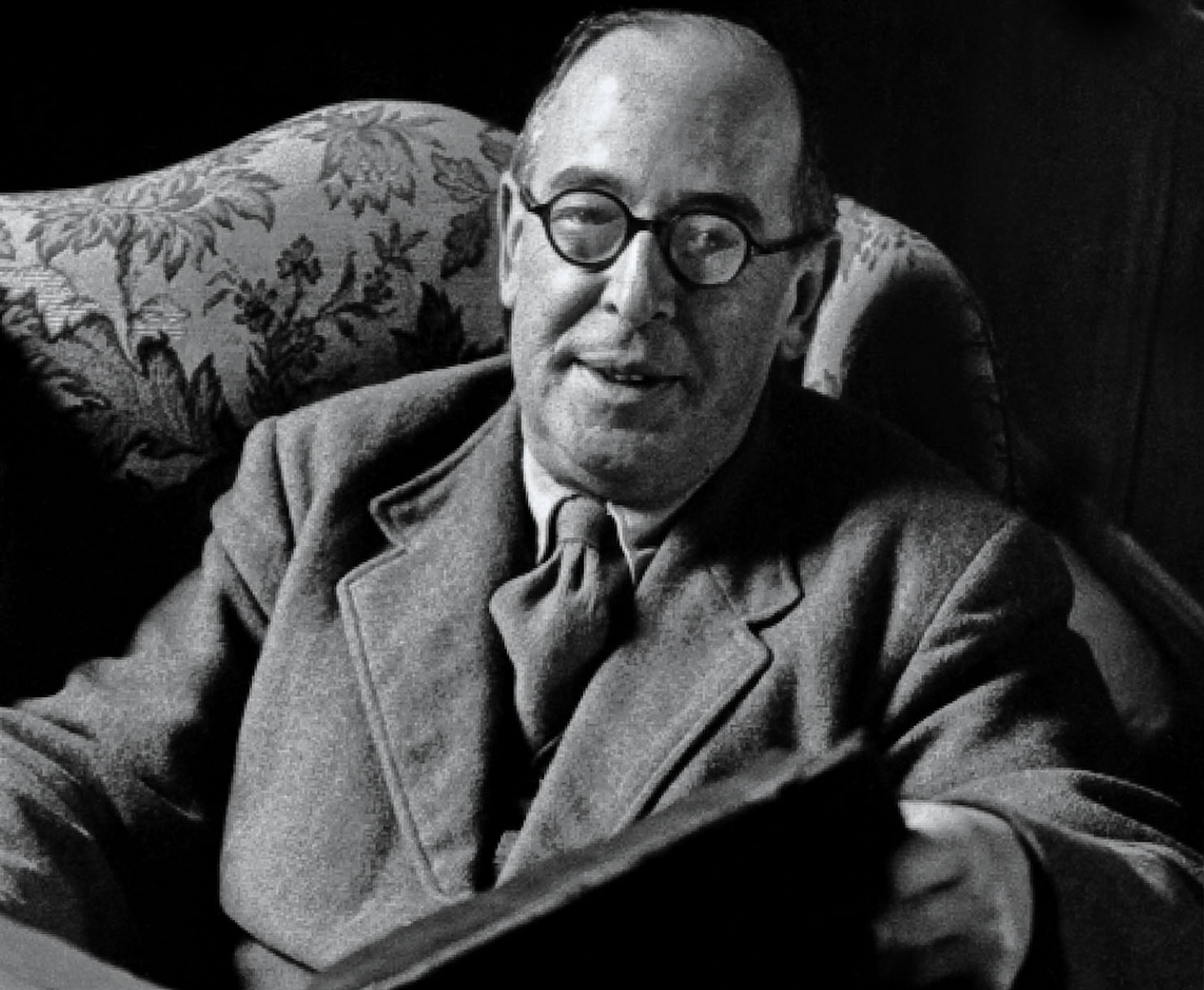
A Meeting with CS Lewis

Photo Source: CommonVision.org

Photo Source:
CommonVision.org

I met CS Lewis in downtown Washington yesterday . He was having a conversation with Sigmund Freud. Well… perhaps it would be better to say that I saw a play that featured an imagined meeting between CS Lewis and S Freud (1). We had seats on the third row, so it felt like meeting them in person.

Dr. Freud insulted Prof. Lewis by remarking that he should just “grow up – be a big boy” and let go of his belief in God. With ideas taken from Freud’s Collected Works (2), the actor argued that belief in God was a neurotic response to childish needs.

Prof. Lewis displayed remarkable poise in defending his faith in Jesus Christ as the son of God. In a manner consistent with Lewis’ comments in Mere Christianity (3), the playwright had Prof. Lewis show sincere appreciation for Freud’s development of psychoanalysis yet confront his narrow-minded refusal to consider the possibility of God.

It was nice to see a mostly healthy debate on the value of faith and science by two brilliant men, even if it was just a play on a Saturday afternoon.

(1) Freud’s Last Session by Mark St. Germain. Theater J, Washington, DC
(2) Sigmund Freud. The Standard Collection of Complete Works (Translated by J. Strachey). London, 1959
(3) CS Lewis. Mere Christianity. New York, 1952.

The 3-Letter S-Word

photo (8)Some have commented on references to sin in my last blog. Specifically, the phrase: “the stench of sin”, has triggered some annoying levels of guilt with some people. The words were described as “fire and brimstone” by one reader and as “Catholic guilt” by another.

Assuredly, getting stuck in guilt was not my intent. The purpose of the blog was to acknowledge the problem of sin and suggest a remedy: repentance, acceptance of forgiveness, and renewal of a right spirit.

Guilt can be healthy or unhealthy. Too much focus on sin leads to unhealthy guilt – an obsessive scrupulosity that handicaps people through overwhelming self-criticism. Too little focus on guilt, on the other hand, leads to self-serving behavior and gross disregard for the concerns of others.

Good guilt is a psycho-spiritual state of conviction that leads to repentance and acceptance of forgiveness. Daily victory over wrong-doing comes through acknowledging our weakness and our utter reliance on the power of God.

As influential psychiatrist Karl Menninger encourages readers in his book, Whatever Became of Sin?, “If we believe in sin – as I do – we have a responsibility for trying to correct it.” Correction starts with repentance and is lived-out through seeking a new way – a process, not perfection.

Menninger, Karl. Whatever Became of Sin? New York, Hawthorne Books, 1973.

Sanctification of the Subconscious

photo (7)In his devotional writings (1), Oswald Chambers urges us to seek spiritual cleaning that reaches deep into the cavernous recesses of memory and motivation: “The blood of Jesus purifies us from all sin – if that means in conscious experience only, may God have mercy on us.”

Forgiveness of sins in conscious awareness is only the start. We need a deeper cleaning that runs deep into the subconscious fears and desires that shape our behavior; a filing of the Holy Spirit that soaks into the muck that corrupts and washes away the stench of sin.

The influence of hidden motivations has been emphasized from Plato to the apostle Paul, from Freud to the apologist C.S. Lewis. The fact that wishes and fears beyond our awareness may shape our behavior is not new.

As the psalmist says: “Search me, God, and know my heart; test me and know my anxious thoughts. See if there is any offensive way in me, and lead me in the way everlasting”(2). We are challenged to welcome God into our subconscious struggles, to be changed in ways that we may not understand.

Like a magnet pulling a chunk of iron, God draws us to himself; then fills the God-sized hole in our souls with his power to choose pathways of holiness over the slippery slopes of self-indulgence. This sanctifying change affects both conscious and subconscious awareness.

Some sinful motives are healed in a moment of prayer; others persist as a source of spiritual conflict for a lifetime. Our nature to sin invariably rises again. Anxieties and drives buried deep in the subconscious seem to fight with desires to trust and obey. We need a lot of help.

Lord God Creator, I pray, sanctify my mind from the depths of my unconscious drives to the surface of my conscious awareness. Fill my soul with your presence and renew a right spirit in me.

Oswald Chambers. My Utmost for His Highest (January 9). Discovery House Publishers, Grand Rapids Michigan. 1935

Holy Bible. Psalm 139:23-24.