

Shrinking Brain – Cause or Effect of Depression


brain
New research provides evidence that long-term depression is associated with a shrinking brain (1).  The study, published last week, suggests that shrinkage in the hippocampus is a consequence of long-term depression.

Scientists compared brain imaging of 1700 patients with clinical depression to brain images of control subjects with no history of depression.  The hippocampus, a region responsible for memory function, was smaller in patients with long-term depression.  Hippocampus shrinkage was not seen in patients who had only experienced one depressive episode.   From this finding, scientists concluded that brain shrinkage comes after, not before, the onset of clinical depression.

In Breaking Through Depression (2), my book on causes and treatments of depression, I explain how stress can lead to brain cell injury.  Being depressed is certainly a stressful experience, one that might lead to brain cell injury. Breaking Through Depression also explains how this brain cell damage appears to be reversed by successful treatment.  Whether brain cell loss is a cause or consequence of depression remains to be conclusively determined but the point is made stronger by new research: stress and depression can damage the brain.

Do what you can to un-do depression.  Find healthy ways to relax and take care of yourself.  Exercise: huff and puff and break a sweat.  Hang-out with good friends for a while.  Engage your spirituality through prayer, meditation, or reading something inspirational.  If these self-care steps don’t lift your mood, then seek professional counseling and consider talking with a physician about medication.  Depressive illness comes with brain cell injury that can be reduced and reversed.

1. Molecular Psychiatry advance online publication 30 June 2015

2. Breaking Through Depression: A Biblical and Medical Approach to Emotional Wholeness. Harvest House Books

Too Many Antidepressants?

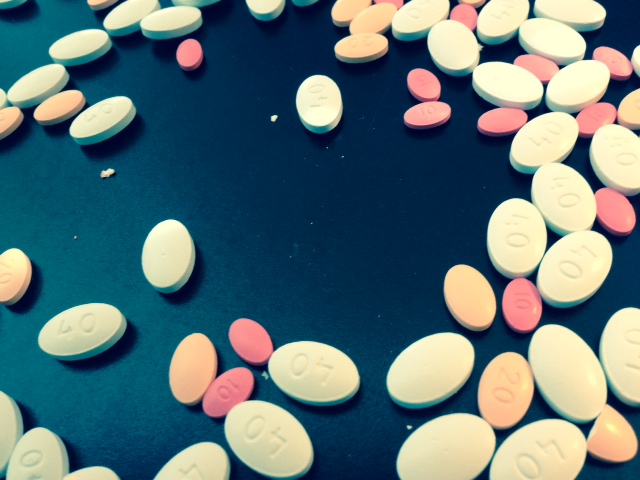
photo (13)Over 10% of the US population use antidepressants each year, according to a recent study.   Researchers at the National Center for Health Statistics*, also found that antidepressant use rose nearly 400% between approximate years of 1998-2008.

Clearly antidepressants can be over-prescribed.  Doctors may rush to treatment  when they hear complaints of  “I’ve been feeling a bit depressed lately”.  Visits to the doctor tend to brief encounters and quick answers may appear necessary.  It takes a little longer to explain that talking therapy or better self-care may be the better choice for relieving sad and worried moods.

On the other hand, many people who could benefit from medication are not getting the help they need.  This can lead to job loss, broken relationships, and social isolation.  Some people refuse to see the problem.  Others refuse to consider medication as a solution.

Yes, there a lot of people taking medications.  Some should be using psychotherapy, exercise, or another health-promoting alternative instead.  Still many others should recognize that the brain develops chemical imbalance just like any other body part and consider medication. Most people using antidepressants have been properly diagnosed with some form of depression or anxiety disorder.  These people should continue using antidepressants under the care of a medical professional.

So yes, antidepressant medications are over-prescribed.  But they are also under-prescribed.  A thoughtful discussion with a psychiatrist or other mental health professional can usually identify who is who and what is what is this dilemma.


* National Center for Health Statistics.  Health, United States, 2010.  Hyattsville, MD. 2011.

Five Tips to Reduce Anxiety and Depression

0561. Develop a healthy habit. Growing a healthy habit may help to displace an unhealthy one.
2. Be open-minded about the benefits of medication to reduce worry or irritability, especially if your moods are creating conflicts in relationships or problems at work.
3. Consider counseling as way to unpack and examine your deeper feelings, ones that are not discussed in most day-to-day relationships.
4. Strengthen your social ties. Call an old friend or have breakfast with someone in the family.
5. Make a goal to grow spiritually over the next year. Then meditate on how your behavior may reflect that change.

Combining Talk Therapy and Antidepressant Medication

photo (11)An article in next month’s issue of JAMA Psychiatry will support combining talk therapy and antidepressant medication in treatment of depression. Merging talk therapy (cognitive therapy chosen in this study) and medication treatment worked better than medicine alone in relieving severe non-chronic depression (1). The antidepressant treatment group in this study saw a 62% improvement while the medicine plus cognitive therapy group saw a 73% improvement. Not outstanding differences between groups, but every little bit helps to someone stuck in a depression.

These results fit well with what most counselors see on a daily basis. In cases of severe depression, people do not have the clear thinking necessary to find solutions to every day hassles. Medications often help to clear these impediments to effective talk therapy.

Results also fit well with what most psychiatrists recommend. Medications are often not enough. In the book BTD (2), I discuss the importance of combining talk therapy, centered on adjusting expectations, with medication treatment.

If you have been doing talk therapy for several months and remain depressed, see a psychiatrist. If you have been trying medications for several months and are not getting better, see a professional counselor. In breaking the grip of depression, combining these two treatments can be better than either one alone.

(1) Pre-released online: Effect of Cognitive Therapy With Antidepressant Medications vs Antidepressants Alone on the Rate of Recovery in Major Depressive Disorder: A Randomized Clinical Trial. Steven D. Hollon and others. JAMA Psychiatry. Online August 20, 2014. doi:10.1001/jamapsychiatry.2014.1054

(2) Breaking Though Depression (see tab above)

Medication Vs Counseling

Photo source: jigsawhealth.com

Photo source:
jigsawhealth.com

To Medicate or Not to Medicate? That is the question.

In managing depression, the answer quite often is to do both. When it comes to treating depressive illness and preventing its return, talking therapies and antidepressant medication work better together than either alone. A leading medical journal recently validated this point by reviewing research on more than 100,000 patients (1). Of the studies focusing on depression, researchers found that adding medication to counseling treatment reduced symptoms. Likewise, adding counseling to medication treatment reduced symptoms.

This should be no surprise. Research discussed in my prior blogs shows that psychotherapy and medication both change the brain. When a counselor says the right words and the counselee applies the right thinking, then brain chemistry may be rebalanced. From another perspective, when antidepressant medication corrects chemical imbalance, then healthier moods promote more effective participation in counseling.

Managing depression can be a long term proposition. As with any illness, keep searching for the right treatment or combination of treatments. Restore the chemical balance that facilitates good thinking with medication and develop healthier choice-patterns with psychotherapy. Remember that depression is an illness of body, mind, and spirit; and seek ways to care for each part of yourself.

1. Huhn, Maximilian and others. Efficacy of pharmacotherapy and psychotherapy for adult psychiatric disorders: A systematic overview of meta-analyses. Journal of the American Medical Association – Psychiatry. Published online April 30, 2014.