
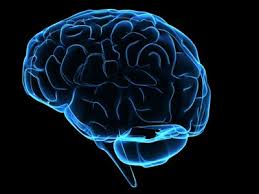
Shrinking Brain – Cause or Effect of Depression


brain
New research provides evidence that long-term depression is associated with a shrinking brain (1).  The study, published last week, suggests that shrinkage in the hippocampus is a consequence of long-term depression.

Scientists compared brain imaging of 1700 patients with clinical depression to brain images of control subjects with no history of depression.  The hippocampus, a region responsible for memory function, was smaller in patients with long-term depression.  Hippocampus shrinkage was not seen in patients who had only experienced one depressive episode.   From this finding, scientists concluded that brain shrinkage comes after, not before, the onset of clinical depression.

In Breaking Through Depression (2), my book on causes and treatments of depression, I explain how stress can lead to brain cell injury.  Being depressed is certainly a stressful experience, one that might lead to brain cell injury. Breaking Through Depression also explains how this brain cell damage appears to be reversed by successful treatment.  Whether brain cell loss is a cause or consequence of depression remains to be conclusively determined but the point is made stronger by new research: stress and depression can damage the brain.

Do what you can to un-do depression.  Find healthy ways to relax and take care of yourself.  Exercise: huff and puff and break a sweat.  Hang-out with good friends for a while.  Engage your spirituality through prayer, meditation, or reading something inspirational.  If these self-care steps don’t lift your mood, then seek professional counseling and consider talking with a physician about medication.  Depressive illness comes with brain cell injury that can be reduced and reversed.

1. Molecular Psychiatry advance online publication 30 June 2015

2. Breaking Through Depression: A Biblical and Medical Approach to Emotional Wholeness. Harvest House Books
Too Many Antidepressants?

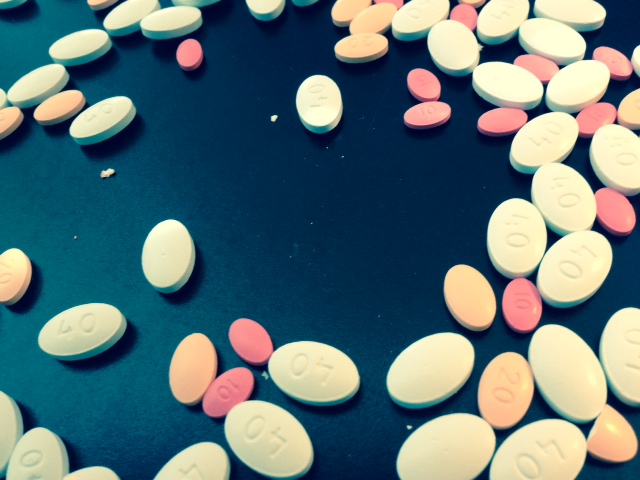
photo (13)Over 10% of the US population use antidepressants each year, according to a recent study.   Researchers at the National Center for Health Statistics*, also found that antidepressant use rose nearly 400% between approximate years of 1998-2008.

Clearly antidepressants can be over-prescribed.  Doctors may rush to treatment  when they hear complaints of  “I’ve been feeling a bit depressed lately”.  Visits to the doctor tend to brief encounters and quick answers may appear necessary.  It takes a little longer to explain that talking therapy or better self-care may be the better choice for relieving sad and worried moods.

On the other hand, many people who could benefit from medication are not getting the help they need.  This can lead to job loss, broken relationships, and social isolation.  Some people refuse to see the problem.  Others refuse to consider medication as a solution.

Yes, there a lot of people taking medications.  Some should be using psychotherapy, exercise, or another health-promoting alternative instead.  Still many others should recognize that the brain develops chemical imbalance just like any other body part and consider medication. Most people using antidepressants have been properly diagnosed with some form of depression or anxiety disorder.  These people should continue using antidepressants under the care of a medical professional.

So yes, antidepressant medications are over-prescribed.  But they are also under-prescribed.  A thoughtful discussion with a psychiatrist or other mental health professional can usually identify who is who and what is what is this dilemma.


* National Center for Health Statistics.  Health, United States, 2010.  Hyattsville, MD. 2011.

Anti-inflammatory Medicines May Have a Future in Depression Treatment

photo (13)

New research out in October suggests that anti-inflammatory medications may prove helpful in treating depression (1).  Scientists are becoming more interested in this class of medication due to a growing body of research suggesting that depression and many other illnesses develop, in part, due to inflammatory processes in the brain.

Stress hormones and inflammatory products produced when the body is stressed make their way to the brain and damage neurons.  They also interfere with natural brain cell repair mechanisms.

Although prior studies of aspirin have failed to show improvements in treatment of depression, scientists in this month’s report looked a 18 studies (over 10,000 participants) of anti-inflammatory medicines and found that treatment with this class of medication was associated a significant reduction in depressive symptoms.

Studying the link between inflammatory processes and the onset of depression may lead to a completely new way of treating this illness.  While it is not time to rush out to the drug store and begin self-medicating ourselves with anti-inflammatory products to improve mood, this research does offer hope for a new class of antidepressant medications being developed in the future.

(1) Ole Kohler and others.  Effect of Anti-inflammatory Treatment on Depression, Depressive Symptoms, and Adverse Effects.  JAMA Psychiatry (Online First), October 15, 2014.

Encouragement for Periods of Depression

125There are dark clouds.
There are blue skies.
You have to know that there are blue skies beyond the dark skies.
Right now, clouds obstruct your view.
Right now, you have to know with intuition and faith, that good days are a reality and when the clouds pass you will experience again the joys of a beautiful day.

The key is to know that bad days will pass – better days will come.
It happens.
As you wait through cloudy days, hang onto a long-range vision and focus your mind on faith.
Strength will rise and clouds will part.